




Choosing the right hosting solution is one of the most important decisions for any website owner. Whether you’re running a business website, an eCommerce store, a SaaS application, or a growing blog, your hosting environment directly impacts performance, security, scalability, and user experience.
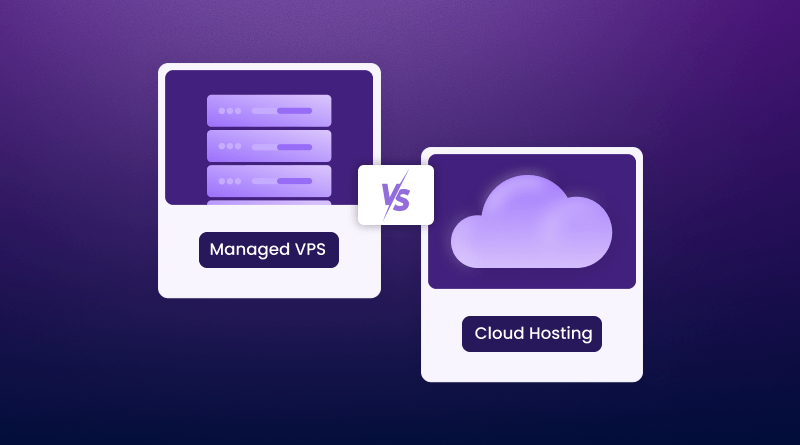
Two of the most popular options today are managed VPS hosting and cloud hosting. Both offer significantly more power and flexibility than traditional shared hosting, but they are designed for different needs and growth stages.
In this guide, we’ll compare managed VPS vs. cloud hosting, explain their advantages and disadvantages, and help you determine which solution is the best fit for your website or business.
What is VPS Hosting?
A Virtual Private Server (VPS) is a hosting solution that uses virtualization technology to divide a single physical server into multiple independent virtual servers. Each VPS functions like its own dedicated server, with allocated resources including CPU, RAM, storage, and bandwidth. This ensures consistent performance, greater reliability, and more control than shared hosting, making VPS an excellent choice for growing websites, applications, and businesses.
Unlike shared hosting, where resources are shared among many users, VPS hosting provides more consistent performance and greater control over the server environment.
What is Managed VPS Hosting?
With Managed VPS Hosting, the hosting provider takes care of essential server administration tasks, allowing you to focus on your website or business instead of server management.
This includes regular operating system updates, timely security patches, continuous server monitoring, automated backups, and expert technical support.
By handling these essential maintenance tasks, managed VPS hosting helps improve server security, stability, and performance while reducing the need for in-house technical expertise. This allows businesses to enjoy VPS performance without needing extensive server management skills.
Pros of VPS Hosting
Dedicated Resources
Your website receives dedicated RAM, CPU, and storage allocations. Other users cannot consume your allocated resources.
Better Performance
Compared to shared hosting, VPS environments offer faster loading times and improved website responsiveness.
Greater Control
Users typically receive root access, allowing software customization and advanced server configurations.
Cost-effective
Managed VPS hosting offers enterprise-level performance without the expense of dedicated servers.
Improved Security
Since your environment is isolated from other users, security risks are reduced compared to shared hosting.
Cons of VPS Hosting
Limited Scalability
Scaling a VPS often requires upgrading server plans manually, which may involve migrations or downtime.
Fixed Resources
Resources are limited to the selected VPS plan.
Higher Cost Than Shared Hosting
Although affordable compared to dedicated servers, VPS hosting costs more than basic shared hosting.
Resource Ceiling
Very high traffic spikes may exceed allocated resources.
When to Choose VPS Hosting
Managed VPS Hosting is a great choice for businesses and professionals who need reliable performance without managing server maintenance themselves. Managed VPS Hosting is ideal for growing business websites, high-performance WordPress websites, WooCommerce stores, and developers building applications.
It is also well suited for digital agencies managing multiple client websites and small SaaS projects. With dedicated resources and managed support, it offers faster speeds, greater security, and better scalability than shared hosting for medium-traffic websites.
If you want predictable performance and dedicated resources at a reasonable cost, managed VPS hosting is often the best choice.
What is Cloud Hosting?
Cloud hosting uses a network of interconnected servers rather than relying on a single physical machine. Instead of hosting your website on one server, cloud infrastructure distributes resources across multiple servers. This creates a highly flexible and scalable hosting environment.
Most cloud hosting providers distribute workloads across clusters of virtual machines connected through high-speed networks. This architecture enables automatic failover, resource pooling, and dynamic scaling, reducing the risk of single-server failures.
Cloud hosting allows businesses to:
- Scale resources on demand
- Handle sudden traffic spikes
- Improve redundancy
- Reduce downtime risks
Many modern SaaS platforms and enterprise applications rely on cloud hosting infrastructure.
Pros of Cloud Hosting
Excellent Scalability
One of the biggest advantages of cloud hosting is its ability to scale resources instantly.
You can increase:
- CPU
- RAM
- Storage
- Bandwidth
Without migrating your website.
High Availability
Since multiple servers work together, cloud environments offer excellent uptime and redundancy.
Better Traffic Handling
Cloud hosting can accommodate sudden traffic surges more efficiently than traditional hosting environments.
Flexible Resource Allocation
Businesses can adjust resources based on actual usage requirements.
Enterprise Reliability
Cloud infrastructure is often designed to minimize service interruptions.
Cons of Cloud Hosting
More Complex Pricing
Cloud hosting pricing structures can sometimes be difficult to predict because they often depend on resource consumption.
Higher Costs for Consistent Workloads
For websites with stable resource requirements, cloud hosting can become more expensive than VPS hosting.
Increased Complexity
Cloud environments may involve additional configuration and management considerations.
Potential Vendor Lock-In
Migrating between cloud providers can sometimes be more complicated.
When to Choose Cloud Hosting
Cloud hosting is designed for websites and applications that require high availability, flexibility, and the ability to scale on demand. It is an excellent choice for high-traffic websites, SaaS applications, enterprise projects, rapidly growing businesses, seasonal businesses that experience traffic spikes, large eCommerce stores, and resource-intensive applications. With resources distributed across multiple servers, cloud hosting delivers greater reliability, improved performance, and seamless scalability as your workload grows.
If your workload changes frequently or experiences unpredictable growth, cloud hosting offers greater flexibility.
Comparison Chart: VPS vs. Cloud Hosting:
| Feature | Managed VPS Hosting | Cloud Hosting |
|---|---|---|
| Best For | WordPress websites, WooCommerce stores, agency reseller hosting, developers, and SMBs. | SaaS applications, enterprise projects, high-traffic websites, and rapidly growing businesses. |
| Scalability | Moderate scalability through plan upgrades as resource requirements increase. | High scalability with on-demand resource allocation. |
| Performance | Dedicated CPU, RAM, and NVMe storage provide stable, predictable performance. | Distributed infrastructure delivers excellent performance with built-in redundancy. |
| Pricing | Fixed monthly pricing for predictable budgeting. | Usage-based pricing that changes according to resource consumption. |
| Flexibility | Full root access with extensive server customization. | Instant resource scaling plus access to a wide range of cloud services. |
| Reliability | Reliable hosting backed by dedicated server resources. | High availability through multiple servers and automatic failover. |
| Security | Isolated environment with customizable security controls. | Advanced infrastructure security, encryption, and built-in redundancy. |
| Support | Fully managed support including updates, monitoring, maintenance, and troubleshooting. | Support depends on the cloud provider and the selected service plan. |
Managed VPS vs Cloud Hosting: Key Differences
1. Scalability
Managed VPS Hosting
VPS hosting offers scalability, but it is generally limited by the physical server’s resources.
Upgrading often involves:
- Changing plans
- Reallocating resources
- Possible downtime
Cloud Hosting
Cloud hosting provides near-instant scalability.
Resources can be increased or decreased based on demand.
Winner: Cloud Hosting
Cloud infrastructure is significantly more scalable.
2. Performance
Managed VPS Hosting
VPS hosting provides dedicated resources; your website or application enjoys consistent and predictable performance without being affected by other users on the same physical server. This makes it an excellent choice for business websites, WooCommerce stores, and medium-sized applications that require reliable speed, stable performance, and the flexibility to handle steady traffic and growing workloads.
Cloud Hosting
Cloud performance is excellent, especially for dynamic workloads.
However, resource-sharing models may vary by provider.
Winner: Tie
Both solutions provide excellent performance when configured properly.
3. Pricing
Managed VPS Hosting
VPS hosting usually comes with fixed monthly pricing.
Benefits:
- Predictable costs
- Easier budgeting
- Better cost control
Cloud Hosting
Cloud hosting often uses pay-as-you-go pricing.
Benefits:
- Pay for what you use
- Flexible scaling
Drawback:
- Monthly bills can fluctuate.
Winner: Managed VPS Hosting
For most businesses with predictable workloads, VPS hosting offers better cost efficiency.
4. Flexibility
Managed VPS Hosting
Provides root access and extensive customization options.
Users can install:
Custom Software
Install and configure software that meets your unique business or application requirements without hosting restrictions.
Development Tools
Deploy programming languages, frameworks, databases, version control systems, and testing tools to create a customized development environment.
Specialized Applications
Run resource-intensive or niche applications, including CRM platforms, ERP software, game servers, AI tools, Docker containers, and other business-critical solutions with complete flexibility.
Cloud Hosting
Offers flexibility through scalable infrastructure and advanced deployment options.
Winner: Cloud Hosting
Cloud platforms provide greater infrastructure flexibility.
5. Reliability
Managed VPS Hosting
A VPS depends largely on a single physical server. Although hardware is highly reliable, failures may still impact availability.
Cloud Hosting
Cloud environments distribute workloads across multiple servers. This improves redundancy and fault tolerance.
Winner: Cloud Hosting
Cloud Hosting offers superior reliability.
6. Security
Managed VPS Hosting
Isolated Environments
Your VPS operates independently from other users, reducing the risk of performance issues or security vulnerabilities caused by neighboring accounts.
Dedicated Resources
Enjoy dedicated CPU, RAM, and storage resources for consistent performance, even during periods of high traffic.
Custom Security Configurations
Configure firewalls, access controls, SSH settings, and other security measures to meet your application’s specific security requirements.
Cloud Hosting
Cloud providers invest heavily in:
Network Security
Advanced firewalls, DDoS protection, intrusion detection, and traffic monitoring help safeguard your infrastructure from unauthorized access and malicious attacks.
Data Redundancy
Data is replicated across multiple storage systems or servers, reducing the risk of data loss and ensuring faster recovery in the event of hardware failures.
Infrastructure Protection –
Enterprise-grade data centers, physical security measures, continuous monitoring, and redundant power and network systems help maintain reliable and secure hosting environments.
Winner: Tie
Both solutions can provide excellent security when managed properly.
7. Support
Managed VPS Hosting
Managed VPS plans typically include:
Server Administration
The hosting provider manages server configuration, maintenance, and optimization, reducing the need for in-house technical expertise.
Monitoring
Continuous 24/7 monitoring helps detect and resolve performance or security issues before they impact your website.
Updates
Regular operating system, software, and security updates keep your server protected against vulnerabilities and running efficiently.
Technical Support
Access to expert support teams ensures quick assistance with troubleshooting, server issues, and hosting-related questions whenever you need help.
Cloud Hosting
Support quality varies significantly between cloud hosting providers. While some include 24/7 technical support and managed services in their plans, others provide only basic infrastructure, requiring users to purchase additional managed service packages for server administration, monitoring, updates, and ongoing technical assistance.
Winner: Managed VPS Hosting
Managed VPS generally provides more hands-on support for non-technical users.
Which Hosting Solution Is Better for Businesses?
Choose Managed VPS Hosting If:
Managed VPS Hosting is the right choice if you prefer predictable monthly costs and consistent performance backed by dedicated server resources. It works best for websites with stable traffic, businesses that want expert server management, and users running WordPress or WooCommerce websites that need reliable speed, security, and technical support without the complexity of managing a server.
Choose Cloud Hosting If:
Cloud hosting is ideal if your website or application is growing rapidly or experiences frequent traffic fluctuations. It offers high availability, on-demand scalability, and flexible resource allocation, making it perfect for enterprise workloads, fast-growing businesses, and applications that require dynamic resources to maintain optimal performance during periods of high demand.
Conclusion
When comparing Managed VPS vs Cloud Hosting, neither option is universally better. The right choice depends on your website’s size, growth plans, budget, and technical requirements.
Managed VPS Hosting provides dedicated resources, predictable pricing, strong support, and excellent performance for businesses with stable workloads. It is often the ideal solution for WordPress websites, WooCommerce stores, agencies, and small-to-medium businesses.
Cloud Hosting, on the other hand, excels in scalability, flexibility, and high availability. It is particularly valuable for rapidly growing businesses, SaaS platforms, and applications with unpredictable traffic patterns.
For many businesses starting their growth journey, Managed VPS Hosting offers the perfect balance between performance, cost, and ease of management. As resource demands increase, Cloud Hosting becomes an attractive option for scaling without limits.
Frequently Asked Questions
For most small businesses, Managed VPS Hosting is often the better choice. It offers predictable pricing, dedicated resources, strong performance, and easier management. Businesses with stable traffic patterns typically find VPS hosting more cost-effective than cloud infrastructure.
Both hosting types can be highly secure. VPS hosting benefits from isolated server environments and dedicated resources, while cloud hosting often includes advanced network security and infrastructure redundancy. Security depends more on configuration, monitoring, and management practices than the hosting type itself.
Managed VPS Hosting is generally more budget-friendly for websites with predictable traffic and resource needs. Cloud Hosting can become more expensive as resource consumption grows, although it offers greater flexibility for businesses with changing demands.
Yes. Many hosting providers offer fully managed VPS Hosting and Managed Cloud Hosting services. These plans typically include server maintenance, updates, monitoring, security management, and technical support, reducing the need for in-house server expertise.
Managed VPS Hosting requires minimal technical knowledge because the hosting provider handles most administrative tasks. Cloud Hosting can vary depending on the provider and configuration, but managed cloud services are also available for businesses that prefer a hands-off approach.
Both can support excellent SEO performance when properly optimized. Website speed, uptime, Core Web Vitals, and user experience matter more than the hosting type itself. A well-configured Managed VPS or Cloud Hosting environment can help improve SEO by providing fast and reliable website performance.
For most WordPress websites, Managed VPS Hosting offers an excellent balance of performance, affordability, and support. Larger WordPress websites experiencing rapid traffic growth may benefit from Cloud Hosting’s scalability and high availability features.